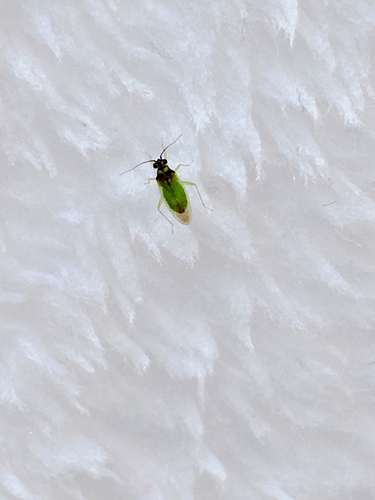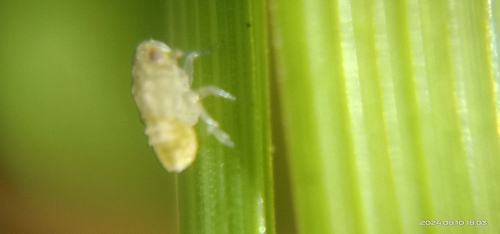
Brown planthopper
Nilaparvata lugens
kayumangging hanip, kayumangging ngusong kabayo
Photo: no rights reserved (CC0 1.0)
How to identify it
- Eggs: white, crescent-shaped, inserted into the leaf sheath or midrib in small groups; two dark eye-spots appear before hatching.
- Nymphs: creamy white turning brown, up to about 3 mm, found at the base of tillers near the water.
- Adults: brown, about 4 mm; long-winged and short-winged forms. They cluster at the base of the plant, not on the leaves.
Damage
- Sap feeding at the base of tillers; leaves turn orange-yellow then brown and dry ("hopperburn"), often in circular patches.
- Honeydew and sooty mould at the base of plants.
- Transmits rice ragged stunt and rice grassy stunt viruses (no cure).
Prevention
- Plant resistant varieties (ask your municipal agriculture office for current ones).
- Remove weeds in and around the field.
- Apply nitrogen in splits, not too much.
- Avoid early, routine insecticide sprays.
- Flood seedbeds for a day so only seedling tips show; sweep small seedbeds with a net.
Natural enemies
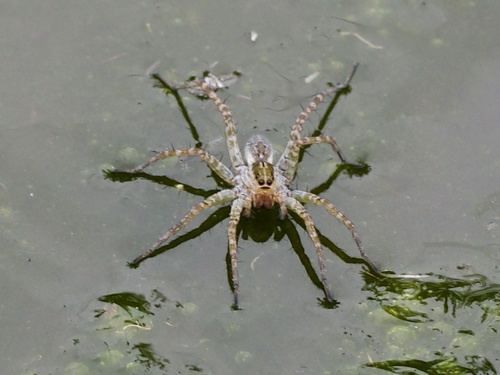
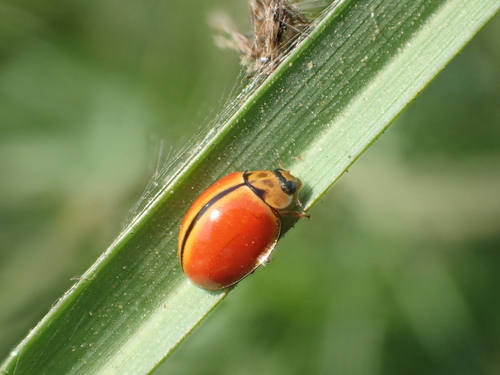
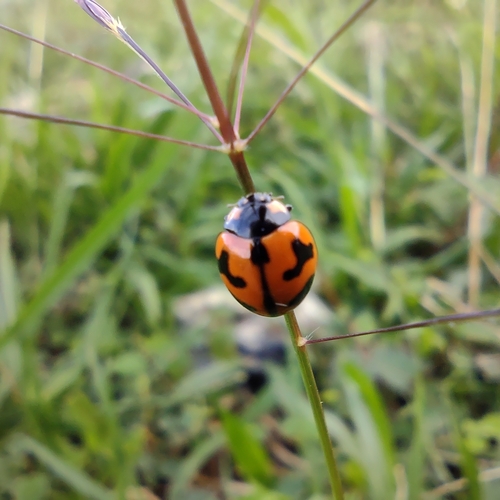
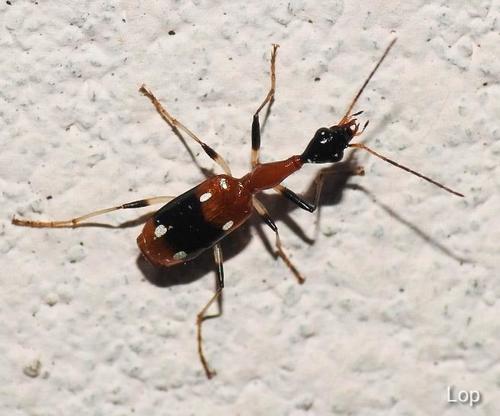
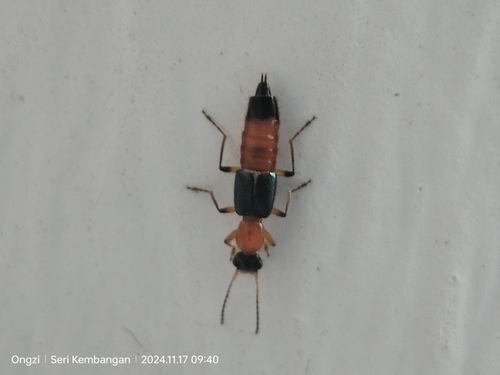
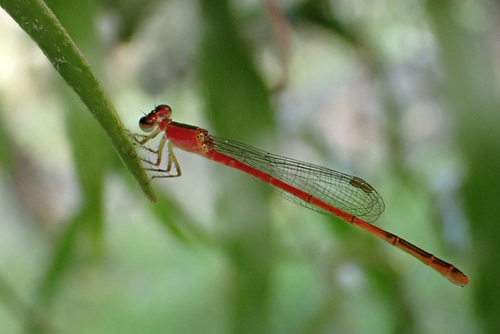
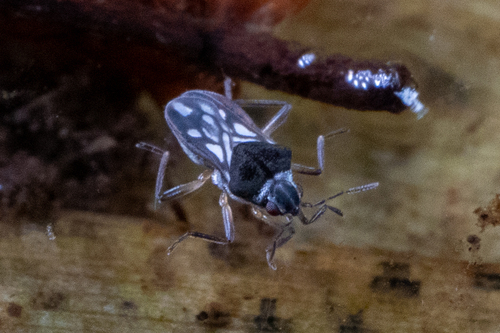
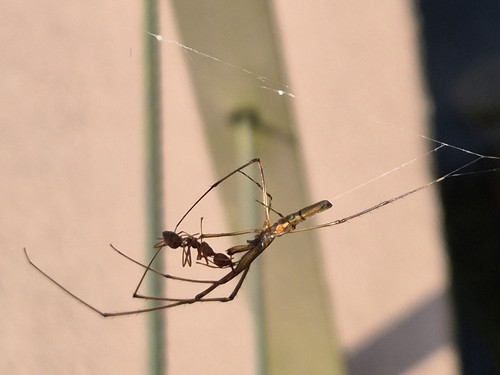
- Spiders, mirid bugs (Cyrtorhinus), water striders, ladybirds, damselflies and egg parasitoids. If natural enemies outnumber planthoppers, the risk of hopperburn is low.
When to act
- Action threshold: more than 1 planthopper per tiller (stem), and planthoppers outnumber natural enemies (IRRI Rice Knowledge Bank: Planthopper)
- Alert level: 3-5 per tiller is considered high (Pacific Pests, Pathogens & Weeds: Rice brown planthopper)
Insecticide only as a last resort, when monitoring shows the threshold is reached and natural enemies are not keeping up. Use only FPA-registered products for this crop and pest, at label rate, with protective equipment, and respect the pre-harvest interval. Rotate insecticide groups to slow resistance.
Sources
IRRI Rice Knowledge Bank: Planthopper / Pacific Pests, Pathogens & Weeds: Rice brown planthopper / PhilRice (2023): Harmful organisms in Philippine rice fields / Wikipedia: Brown planthopper
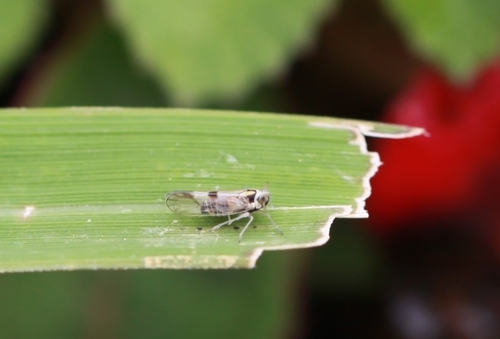
White-backed Planthopper
Sogatella furcifera
puting likod ngusong kabayo
Limited sources so far. Check with your municipal agriculturist.
Photo: (c) Tim Parker, some rights reserved (CC BY) (CC BY 4.0)
How to identify it
- Adults: small planthopper with a distinct pale (white) stripe down the middle of the back between the wings; long-winged forms common.
- Nymphs: pale, feed at the lower parts of the plant with brown planthopper.
Damage
- Sap feeding causes yellowing and, at high numbers, hopperburn and drying of the crop.
Prevention
- As for brown planthopper: resistant varieties, weed control, balanced nitrogen, no early routine sprays.
Natural enemies
- The same natural enemies as brown planthopper.
When to act
- Action threshold: more than 1 planthopper per tiller (all planthopper species together), and more planthoppers than natural enemies (IRRI Rice Knowledge Bank: Planthopper)
Insecticide only as a last resort, when monitoring shows the threshold is reached and natural enemies are not keeping up. Use only FPA-registered products for this crop and pest, at label rate, with protective equipment, and respect the pre-harvest interval. Rotate insecticide groups to slow resistance.
Sources
IRRI Rice Knowledge Bank: Planthopper / PhilRice (2023): Harmful organisms in Philippine rice fields
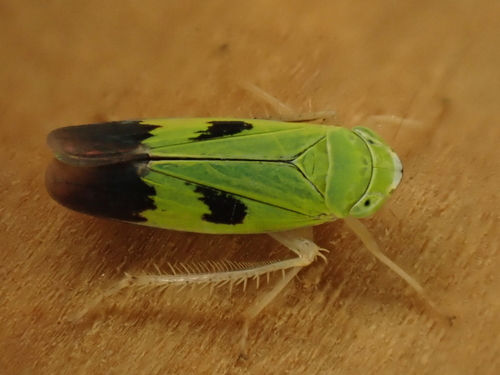
Nephotettix virescens
berdeng ngusong kabayo (green leafhoppers)
Photo: (c) Sagnik Dutta Roy, some rights reserved (CC BY) (CC BY 4.0)
How to identify it
- Eggs: white to pale yellow, inside leaf sheaths or midribs.
- Nymphs: yellow to pale green, with or without black markings.
- Adults: pale green leafhopper, often with black markings on the wings; feeds on the upper parts of the plant and on the upper leaf surface.
Damage
- Main importance: spreads tungro virus (stunted, yellow-orange plants with few tillers), also yellow dwarf.
- Direct sap-feeding damage is usually minor.
Prevention
- Plant tungro-resistant varieties.
- Synchronise planting with neighbours; at most two rice crops per year.
- Transplant seedlings older than 3 weeks.
- Avoid planting at the peak of leafhopper flights (light-trap records help).
- Use the Leaf Color Chart to avoid excess nitrogen.
- Control grassy weeds on bunds.
Natural enemies
- Egg parasitoid wasps, mirid bugs, spiders, damselflies, veliid bugs and fungal pathogens.
When to act
No published threshold found yet; set one for your farm in the ENTOCULA field map.
Insecticide only as a last resort, when monitoring shows the threshold is reached and natural enemies are not keeping up. Use only FPA-registered products for this crop and pest, at label rate, with protective equipment, and respect the pre-harvest interval. Rotate insecticide groups to slow resistance.
Sources
IRRI Rice Knowledge Bank: Green leafhopper / PhilRice (2023): Harmful organisms in Philippine rice fields
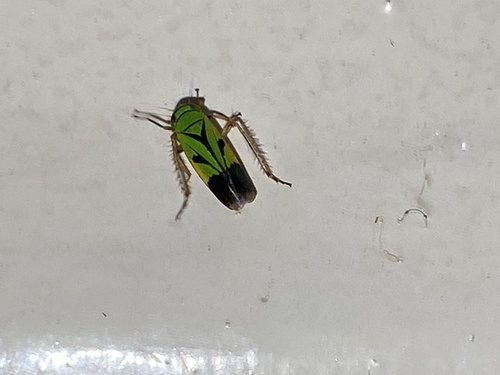
Green Rice Leafhopper
Nephotettix nigropictus
berdeng ngusong kabayo (green leafhoppers)
Limited sources so far. Check with your municipal agriculturist.
Photo: (c) AnnLazaro, some rights reserved (CC BY-SA) (CC BY-SA 4.0)
How to identify it
- Green leafhopper; adults pale green, the wings often with black markings (see the reference photos).
Damage
- Sap feeding; can carry rice viruses.
Prevention
- Same practices as for N. virescens: resistant varieties, synchronous planting, balanced nitrogen, weed control.
Natural enemies
- Same natural enemies as other green leafhoppers.
When to act
No published threshold found yet; set one for your farm in the ENTOCULA field map.
Insecticide only as a last resort, when monitoring shows the threshold is reached and natural enemies are not keeping up. Use only FPA-registered products for this crop and pest, at label rate, with protective equipment, and respect the pre-harvest interval. Rotate insecticide groups to slow resistance.
Sources
IRRI Rice Knowledge Bank: Green leafhopper / PhilRice (2023): Harmful organisms in Philippine rice fields
Nephotettix malayanus
berdeng ngusong kabayo (green leafhoppers)
Limited sources so far. Check with your municipal agriculturist.
How to identify it
- Green leafhopper; one of the two species named by IRRI as tungro vectors.
Damage
Prevention
When to act
No published threshold found yet; set one for your farm in the ENTOCULA field map.
Insecticide only as a last resort, when monitoring shows the threshold is reached and natural enemies are not keeping up. Use only FPA-registered products for this crop and pest, at label rate, with protective equipment, and respect the pre-harvest interval. Rotate insecticide groups to slow resistance.
Sources
IRRI Rice Knowledge Bank: Green leafhopper
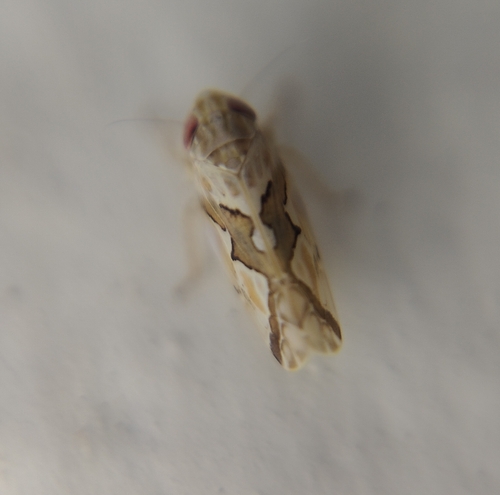
Zig-zag Winged Rice Leafhopper
Maiestas dorsalis
Photo: (c) Mitul and Vijul Singh, some rights reserved (CC BY) (CC BY 4.0)
How to identify it
- Eggs: white, laid singly in leaf sheaths.
- Nymphs and adults: yellowish brown; adults have a zigzag pattern on the wings and sit in the upper parts of the plant.
Damage
- Leaf tips dry; whole leaves turn orange and the margins curl.
- Can transmit tungro, dwarf and orange leaf viruses, but usually occurs in low numbers (minor pest).
Prevention
- Remove volunteer rice and grassy weeds between crops.
Natural enemies
- Mymarid wasps and mirid bugs (eggs), dryinid wasps and pipunculid flies (nymphs and adults), spiders.
When to act
No published threshold found yet; set one for your farm in the ENTOCULA field map.
Insecticide only as a last resort, when monitoring shows the threshold is reached and natural enemies are not keeping up. Use only FPA-registered products for this crop and pest, at label rate, with protective equipment, and respect the pre-harvest interval. Rotate insecticide groups to slow resistance.
Sources
IRRI Rice Knowledge Bank: Zigzag leafhopper / Wikipedia: Maiestas dorsalis
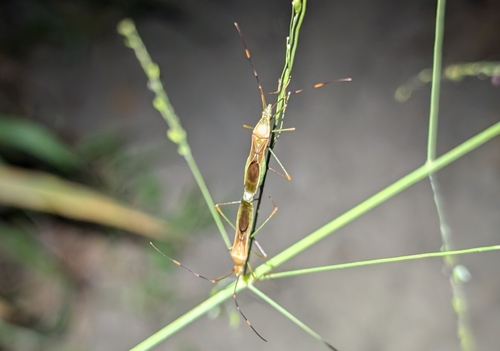
Rice Ear Bug
Leptocorisa oratoria
Photo: (c) Ken Puliafico, some rights reserved (CC BY) (CC BY 4.0)
How to identify it
- Eggs: oval, shiny, reddish brown, in rows along the leaf midrib.
- Nymphs and adults: slender, long-legged, brown-green bugs on the panicles; give off a strong, offensive smell.
Damage
- Suck the milky contents of developing grains: small, shrivelled, spotty or empty grains and upright panicles.
- Can reduce yield by up to about 30%.
Prevention
- Remove weeds during fallow periods.
- Level fields and fertilise evenly so the crop flowers at the same time; synchronous planting in the village.
- Net-catch bugs early morning or late afternoon when numbers are low.
Natural enemies
- Some wasps, grasshoppers and spiders attack rice bugs or their eggs; indiscriminate spraying causes resurgence.
When to act
- Action threshold: more than 10 rice bugs per 20 hills (IRRI Rice Knowledge Bank: Rice bug)
Insecticide only as a last resort, when monitoring shows the threshold is reached and natural enemies are not keeping up. Use only FPA-registered products for this crop and pest, at label rate, with protective equipment, and respect the pre-harvest interval. Rotate insecticide groups to slow resistance.
Sources
IRRI Rice Knowledge Bank: Rice bug / Wikipedia: Leptocorisa oratoria
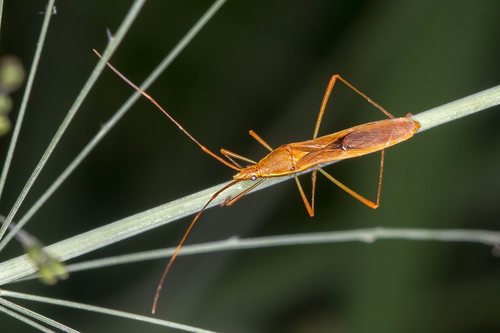
Paddy Bug
Leptocorisa acuta
Photo: (c) Andrew Allen, some rights reserved (CC BY) (CC BY 4.0)
How to identify it
- Slender green-brown rice bug, very similar to L. oratoria; smells when disturbed.
Damage
- Same as L. oratoria: empty and discoloured grains from feeding at the milk stage.
Prevention
When to act
- Action threshold: more than 10 rice bugs per 20 hills (IRRI Rice Knowledge Bank: Rice bug)
Insecticide only as a last resort, when monitoring shows the threshold is reached and natural enemies are not keeping up. Use only FPA-registered products for this crop and pest, at label rate, with protective equipment, and respect the pre-harvest interval. Rotate insecticide groups to slow resistance.
Sources
IRRI Rice Knowledge Bank: Rice bug / Wikipedia: Leptocorisa acuta
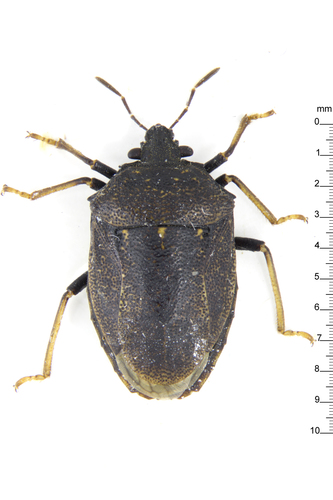
Scotinophara coarctata
itim na atangya
Photo: (c) Claas Damken, some rights reserved (CC BY-SA) (CC BY-SA 4.0)
How to identify it
- Nymphs and adults: dark, shield-shaped stink bugs feeding at the base of the plant (see reference photo).
- Adults fly to lights in large numbers, especially on full-moon nights.
Damage
- Leaves turn reddish brown or yellow with chlorotic lesions; fewer tillers; deadhearts; stunted or no panicles; whiteheads at booting.
- Heavy infestations cause "bugburn", usually visible after heading. About 10 adults per hill can cut yield by up to 35%.
Prevention
- Resistant varieties.
- Keep fields weed-free; dry the field after ploughing.
- Plant varieties of the same maturity, synchronously.
- Light traps for egg-laying adults from 5 days before to 5 days after full moon.
- After harvest, plough to remove remaining bugs.
- Early in an infestation, raise the water level for 2-3 days so the bugs move up; flooding also kills eggs.
Natural enemies
- Egg wasps, ground beetles, spiders, crickets, red ants, ladybirds, ducks, toads and fungi.
When to act
No published threshold found yet; set one for your farm in the ENTOCULA field map.
Insecticide only as a last resort, when monitoring shows the threshold is reached and natural enemies are not keeping up. Use only FPA-registered products for this crop and pest, at label rate, with protective equipment, and respect the pre-harvest interval. Rotate insecticide groups to slow resistance.
Sources
IRRI Rice Knowledge Bank: Black bug / PhilRice (2023): Harmful organisms in Philippine rice fields / Wikipedia: Scotinophara coarctata
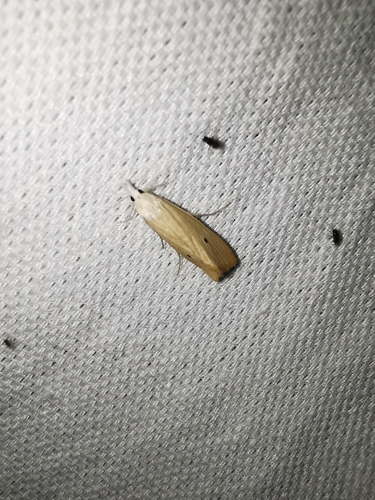
Rice Yellow Stem Borer
Scirpophaga incertulas
dilaw na aksip
Photo: (c) Paolo Co, some rights reserved (CC BY) (CC BY 4.0)
How to identify it
- Egg masses: on leaves, covered with buff hairs from the female.
- Larva: pale, bores inside the stem.
- Adult moth: female larger (wingspan about 34 mm), yellowish with a black dot on each forewing; male smaller and browner.
Damage
- Vegetative stage: deadheart (central tiller dies and pulls out easily).
- Reproductive stage: whitehead (white, empty panicle).
- Small holes and frass in stems.
- Can cause about 20% loss in early-planted and up to 80% in late-planted crops.
Prevention
- Resistant varieties; synchronous planting.
- Hand-pick egg masses in the seedbed and at transplanting; clip seedling leaf tips before transplanting.
- Raise water periodically to submerge eggs on lower plant parts.
- Harvest at ground level, remove stubble and volunteer rice, plough and flood after harvest.
- Split nitrogen applications.
Natural enemies
- Many egg parasitoids (Trichogramma and others), plus ants, ladybirds, staphylinid beetles, crickets, spiders and fungi.
When to act
- Action threshold: 5% deadhearts at the early (initial) stage; reported as 25% at flowering and 10% at ripening (Litsinger et al. (2006) Evaluation of action thresholds for chronic rice insect pests in the Philippines. IV. Stemborers. Int. J. Pest Management 52:195-207)
Insecticide only as a last resort, when monitoring shows the threshold is reached and natural enemies are not keeping up. Use only FPA-registered products for this crop and pest, at label rate, with protective equipment, and respect the pre-harvest interval. Rotate insecticide groups to slow resistance.
Sources
IRRI Rice Knowledge Bank: Stem borer / Litsinger et al. (2006) Evaluation of action thresholds for chronic rice insect pests in the Philippines. IV. Stemborers. Int. J. Pest Management 52:195-207 / PhilRice (2023): Harmful organisms in Philippine rice fields / Wikipedia: Scirpophaga incertulas
Scirpophaga innotata
puting aksip, puting bagumbong
Limited sources so far. Check with your municipal agriculturist.
How to identify it
- White stem borer: adult moth white; larva bores in the stem like other stem borers.
Damage
- Deadhearts and whiteheads; important in rainfed wetland rice and can cause outbreaks.
Prevention
- As for yellow stem borer.
When to act
- Action threshold: 5% deadhearts at the early stage (stem borers) (Litsinger et al. (2006) Evaluation of action thresholds for chronic rice insect pests in the Philippines. IV. Stemborers. Int. J. Pest Management 52:195-207)
Insecticide only as a last resort, when monitoring shows the threshold is reached and natural enemies are not keeping up. Use only FPA-registered products for this crop and pest, at label rate, with protective equipment, and respect the pre-harvest interval. Rotate insecticide groups to slow resistance.
Sources
IRRI Rice Knowledge Bank: Stem borer / PhilRice (2023): Harmful organisms in Philippine rice fields / Litsinger et al. (2006) Evaluation of action thresholds for chronic rice insect pests in the Philippines. IV. Stemborers. Int. J. Pest Management 52:195-207
Asiatic Rice Borer
Chilo suppressalis
guhitang aksip
How to identify it
- Eggs: flat, scale-like, in overlapping rows.
- Larva: grey-white with a black head when young; full-grown larvae have dark stripes along the body.
- Adult moth: wingspan about 18-20 mm, straw to orange-brown forewings sprinkled with dark scales.
Damage
- Deadhearts and whiteheads; can cause very high losses when severe.
Prevention
- As for yellow stem borer: synchronous planting, remove stubble, split nitrogen.
When to act
- Action threshold: 5% deadhearts at the early stage (stem borers) (Litsinger et al. (2006) Evaluation of action thresholds for chronic rice insect pests in the Philippines. IV. Stemborers. Int. J. Pest Management 52:195-207)
Insecticide only as a last resort, when monitoring shows the threshold is reached and natural enemies are not keeping up. Use only FPA-registered products for this crop and pest, at label rate, with protective equipment, and respect the pre-harvest interval. Rotate insecticide groups to slow resistance.
Sources
IRRI Rice Knowledge Bank: Stem borer / PhilRice (2023): Harmful organisms in Philippine rice fields / Litsinger et al. (2006) Evaluation of action thresholds for chronic rice insect pests in the Philippines. IV. Stemborers. Int. J. Pest Management 52:195-207 / Wikipedia: Chilo suppressalis
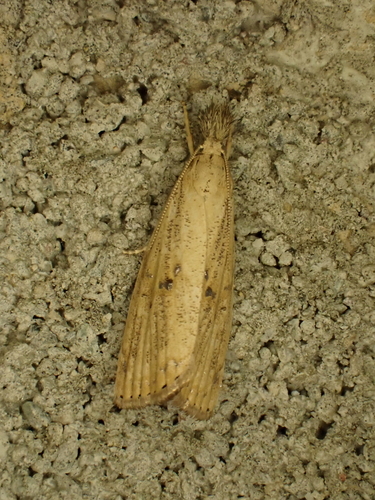
Dark headed striped borer
Chilo polychrysus
Limited sources so far. Check with your municipal agriculturist.
Photo: (c) Sagnik Dutta Roy, some rights reserved (CC BY) (CC BY 4.0)
How to identify it
- Dark-headed striped stem borer: moth wingspan 16-25 mm, yellow-brown wings with small dark spots; larva bores rice stems.
Damage
- Deadhearts and whiteheads like other stem borers.
Prevention
- As for other stem borers.
When to act
No published threshold found yet; set one for your farm in the ENTOCULA field map.
Insecticide only as a last resort, when monitoring shows the threshold is reached and natural enemies are not keeping up. Use only FPA-registered products for this crop and pest, at label rate, with protective equipment, and respect the pre-harvest interval. Rotate insecticide groups to slow resistance.
Sources
IRRI Rice Knowledge Bank: Stem borer / Wikipedia: Chilo polychrysus
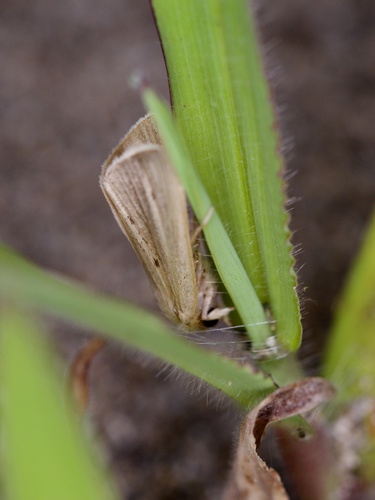
Purple Stem Borer
Sesamia inferens
mala rosa na aksip
Photo: (c) りなべる, some rights reserved (CC BY) (CC BY 4.0)
How to identify it
- Larva: smooth, without hairs, cream with a pink tinge and a brown head; 30-40 mm when grown.
- Adult moth: wingspan about 28 mm, straw-coloured with reddish-brown streaks; hindwings whitish.
- Eggs are laid bare between the leaf sheath and stem.
Damage
- Deadhearts and whiteheads in rice; also attacks corn and sugarcane.
Prevention
- As for other stem borers; keep rice away from sugarcane where possible.
When to act
No published threshold found yet; set one for your farm in the ENTOCULA field map.
Insecticide only as a last resort, when monitoring shows the threshold is reached and natural enemies are not keeping up. Use only FPA-registered products for this crop and pest, at label rate, with protective equipment, and respect the pre-harvest interval. Rotate insecticide groups to slow resistance.
Sources
IRRI Rice Knowledge Bank: Stem borer / PhilRice (2023): Harmful organisms in Philippine rice fields / Govt. of India (NCIPM, DPPQ&S, NIPHM, 2014): IPM package for Maize / Wikipedia: Sesamia inferens
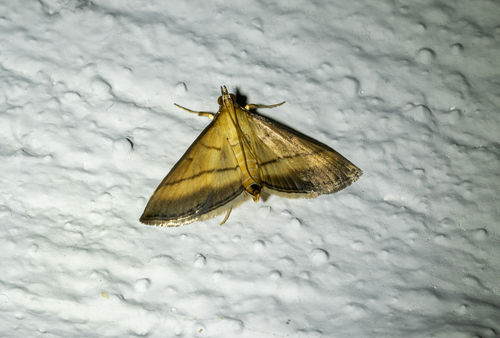
Rice Leaf-roller
Cnaphalocrocis medinalis
magbibilot, maniniklop
Photo: (c) Forest Botial-Jarvis, some rights reserved (CC BY) (CC BY 4.0)
How to identify it
- Eggs: flat, disc-shaped, laid singly.
- Larva: green caterpillar living inside a leaf it has folded and tied with silk.
- Adult: small moth, yellowish-brown wings with dark bands; hides in shade by day.
Damage
- Long white, transparent streaks on leaves where the larva has eaten the green tissue; folded leaves.
- Heavily attacked fields look scorched. Damage matters most when it hits the flag leaf and the next two leaves.
Prevention
- Resistant varieties; rotate or leave a fallow; avoid ratooning.
- Remove grassy weeds; avoid very dense planting; balanced fertiliser.
- Do not spray early in the crop: young rice recovers, and early sprays cause planthopper outbreaks.
Natural enemies
- Many parasitoids and predators keep leaffolders down when not disturbed by sprays.
When to act
No published threshold found yet; set one for your farm in the ENTOCULA field map.
Insecticide only as a last resort, when monitoring shows the threshold is reached and natural enemies are not keeping up. Use only FPA-registered products for this crop and pest, at label rate, with protective equipment, and respect the pre-harvest interval. Rotate insecticide groups to slow resistance.
Sources
IRRI Rice Knowledge Bank: Rice leaffolder / PhilRice (2023): Harmful organisms in Philippine rice fields / Wikipedia: Cnaphalocrocis medinalis
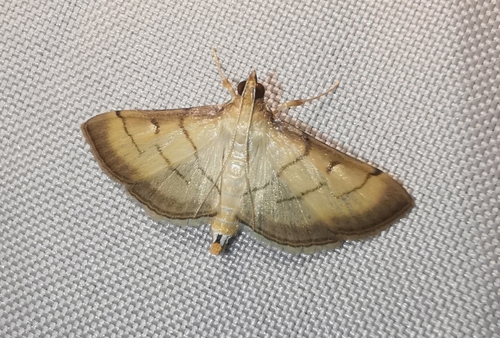
Cnaphalocrocis patnalis
Limited sources so far. Check with your municipal agriculturist.
Photo: (c) Cheryl Stinchcomb, some rights reserved (CC BY) (CC BY 4.0)
How to identify it
- A rice leaffolder very similar to C. medinalis (see reference photos); feeds on rice and many grasses.
Damage
- Folded leaves and white feeding streaks, as for C. medinalis.
Prevention
When to act
No published threshold found yet; set one for your farm in the ENTOCULA field map.
Insecticide only as a last resort, when monitoring shows the threshold is reached and natural enemies are not keeping up. Use only FPA-registered products for this crop and pest, at label rate, with protective equipment, and respect the pre-harvest interval. Rotate insecticide groups to slow resistance.
Sources
IRRI Rice Knowledge Bank: Rice leaffolder / Wikipedia: Cnaphalocrocis patnalis
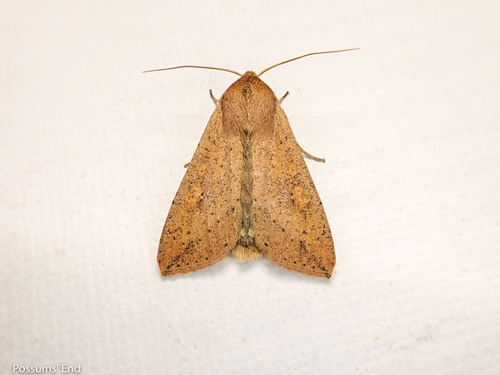
Northern armyworm
Mythimna separata
arabas, harabas, tagustos (names used for armyworms)
Photo: (c) Possums' End, some rights reserved (CC BY) (CC BY 4.0)
How to identify it
- Larva: up to about 40 mm, with dark and pale stripes along the body.
- Adult moth: wingspan 35-50 mm, greyish-yellow forewings with a small white point on the kidney-shaped spot.
- Eggs are laid in masses of hundreds.
Damage
- Caterpillars eat leaves from the tips and margins, leaving midribs; can cut seedlings at the base and cut panicles. They move in large groups during outbreaks.
Prevention
- Flood seedbeds (best defence in rice).
- Seedbeds away from large weedy areas; plough fallow land; remove weeds.
- Trenches with ash around fields; branches as hiding places for hand-collection.
Natural enemies
- Wasps and spiders; avoid killing them.
When to act
- Action threshold: 1 larva per plant (maize, India) (Govt. of India (NCIPM, DPPQ&S, NIPHM, 2014): IPM package for Maize)
Insecticide only as a last resort, when monitoring shows the threshold is reached and natural enemies are not keeping up. Use only FPA-registered products for this crop and pest, at label rate, with protective equipment, and respect the pre-harvest interval. Rotate insecticide groups to slow resistance.
Sources
IRRI Rice Knowledge Bank: Armyworm / PhilRice (2023): Harmful organisms in Philippine rice fields / Govt. of India (NCIPM, DPPQ&S, NIPHM, 2014): IPM package for Maize / Wikipedia: Mythimna separata
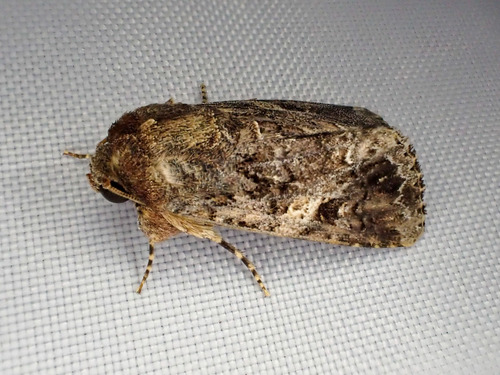
Lawn Armyworm Moth
Spodoptera mauritia
arabas, harabas (names used for armyworms)
Limited sources so far. Check with your municipal agriculturist.
Photo: no rights reserved (CC0 1.0)
How to identify it
- Rice swarming caterpillar: moth about 40 mm wingspan, dark grey-brown; caterpillars feed in groups.
Damage
- Leaves cut off, seedlings cut at the base; large groups move from field to field.
Prevention
- Flood seedbeds; remove weeds; plough fallow land.
Natural enemies
When to act
No published threshold found yet; set one for your farm in the ENTOCULA field map.
Insecticide only as a last resort, when monitoring shows the threshold is reached and natural enemies are not keeping up. Use only FPA-registered products for this crop and pest, at label rate, with protective equipment, and respect the pre-harvest interval. Rotate insecticide groups to slow resistance.
Sources
IRRI Rice Knowledge Bank: Armyworm / Wikipedia: Spodoptera mauritia
Fly
Hydrellia philippina
langaw palay, langaw bukid
How to identify it
- Eggs: elongated, white, glued to leaves.
- Larva (maggot): legless, transparent to cream when young, yellow when mature; inside the unopened central leaf.
- Adult: small fly resting on leaves near the water.
Damage
- Yellow spots, white or transparent patches and pinholes along the inner margin of leaves as they unfold; leaves break easily; some stunting.
Prevention
- No cultural control is known. Insecticides are not recommended: the plant compensates and symptoms usually disappear by maximum tillering.
Natural enemies
- Parasitic wasps, dolichopodid flies, ephydrid flies and spiders.
When to act
No published threshold found yet; set one for your farm in the ENTOCULA field map.
Insecticide only as a last resort, when monitoring shows the threshold is reached and natural enemies are not keeping up. Use only FPA-registered products for this crop and pest, at label rate, with protective equipment, and respect the pre-harvest interval. Rotate insecticide groups to slow resistance.
Sources
IRRI Rice Knowledge Bank: Rice whorl maggot / PhilRice (2023): Harmful organisms in Philippine rice fields
How to identify it
- Adult: bluish-black beetle about 5 mm long covered with long spines.
- Larva: pale yellow, flat, mining inside the leaf.
Damage
- Adults scrape the upper leaf surface leaving white streaks parallel to the midrib; larvae tunnel and make irregular translucent patches. Badly attacked fields look burnt.
Prevention
- Do not over-fertilise.
- Cut shoot tips to remove eggs; clipping and burying shoots in mud reduces grubs.
Natural enemies
- Egg and larval wasps, a reduviid bug, fungal pathogens.
When to act
No published threshold found yet; set one for your farm in the ENTOCULA field map.
Insecticide only as a last resort, when monitoring shows the threshold is reached and natural enemies are not keeping up. Use only FPA-registered products for this crop and pest, at label rate, with protective equipment, and respect the pre-harvest interval. Rotate insecticide groups to slow resistance.
Sources
IRRI Rice Knowledge Bank: Rice hispa / Wikipedia: Dicladispa armigera
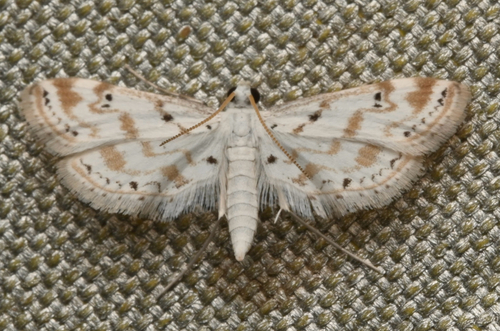
Rice Case Bearer
Parapoynx stagnalis
mambibilot, uod na nasa supot
Photo: (c) Robert Taylor, some rights reserved (CC BY) (CC BY 4.0)
How to identify it
- Larva lives in a tube cut from rice leaves; cases float on the water or cling to leaf sheaths.
- Adult: whitish moth with pale brown wavy lines, attracted to lights.
- Published by IRRI and PhilRice as Nymphula depunctalis.
Damage
- Leaf tips cut at right angles as if with scissors; ladder-like scraped leaf tissue; seedlings may die.
Prevention
- Drain the field (the larvae need water).
- Transplant older seedlings; wider spacing (e.g. 30 x 20 cm); correct fertiliser.
Natural enemies
- Snails eat eggs, water beetles eat larvae, spiders, dragonflies and birds eat adults.
When to act
No published threshold found yet; set one for your farm in the ENTOCULA field map.
Insecticide only as a last resort, when monitoring shows the threshold is reached and natural enemies are not keeping up. Use only FPA-registered products for this crop and pest, at label rate, with protective equipment, and respect the pre-harvest interval. Rotate insecticide groups to slow resistance.
Sources
IRRI Rice Knowledge Bank: Rice caseworm / PhilRice (2023): Harmful organisms in Philippine rice fields / Wikipedia: Parapoynx stagnalis
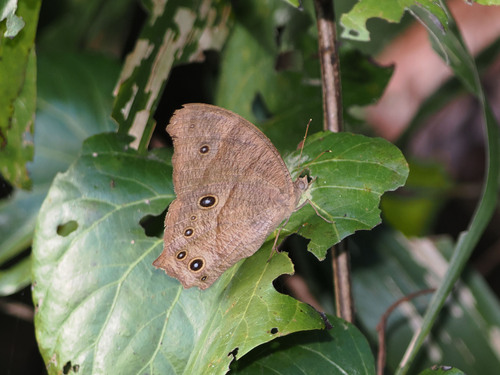
Common Evening Brown
Melanitis leda
Photo: (c) Cheongweei Gan, some rights reserved (CC BY) (CC BY 4.0)
How to identify it
- Green-horned caterpillar: yellow-green larva with two horns on the head, blends with rice leaves.
- Adult: brown evening butterfly with eye-spots on the wings.
Damage
- Eats leaf margins and tips. Usually a minor pest; natural enemies normally control it and the plant recovers.
Prevention
- No action usually needed; protect natural enemies.
When to act
No published threshold found yet; set one for your farm in the ENTOCULA field map.
Insecticide only as a last resort, when monitoring shows the threshold is reached and natural enemies are not keeping up. Use only FPA-registered products for this crop and pest, at label rate, with protective equipment, and respect the pre-harvest interval. Rotate insecticide groups to slow resistance.
Sources
IRRI Rice Knowledge Bank: Greenhorned caterpillar / Wikipedia: Melanitis leda
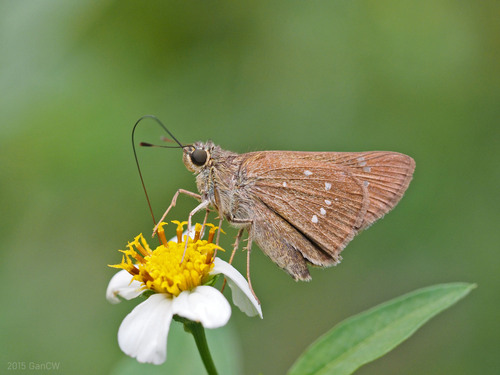
Small Branded Swift
Pelopidas mathias
Photo: (c) Cheongweei Gan, some rights reserved (CC BY) (CC BY 4.0)
How to identify it
- Rice skipper: larva rolls or ties leaves into a shelter and feeds at night.
- Adult: olive-brown skipper butterfly with small pale spots; fast, darting flight.
Damage
- Leaf tissue eaten, leaves rolled; usually minor and rarely causes yield loss.
Prevention
- No action usually needed; natural enemies control it.
When to act
No published threshold found yet; set one for your farm in the ENTOCULA field map.
Insecticide only as a last resort, when monitoring shows the threshold is reached and natural enemies are not keeping up. Use only FPA-registered products for this crop and pest, at label rate, with protective equipment, and respect the pre-harvest interval. Rotate insecticide groups to slow resistance.
Sources
IRRI Rice Knowledge Bank: Rice skipper / Wikipedia: Pelopidas mathias
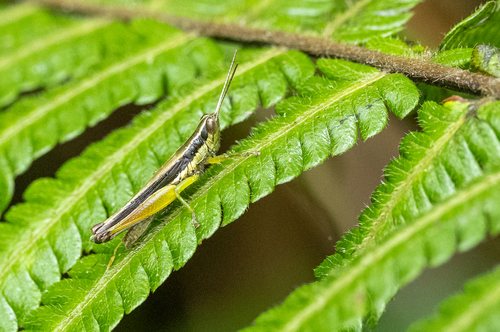
Spine-kneed Grasshopper
Oxya hyla
balang, lukton
Photo: (c) Forest Botial-Jarvis, some rights reserved (CC BY) (CC BY 4.0)
How to identify it
- Short-horned grasshopper; yellow and brown nymphs and adults on the foliage; eggs laid in pods in soil.
Damage
- Large parts of leaf edges eaten; panicles cut; nymphs eat seedlings.
Prevention
- Flood stubble, shave bunds, sweep along bunds; pick adults at night when sluggish.
Natural enemies
- Wasps, flies, nematodes, fungi, birds, frogs and spiders.
When to act
No published threshold found yet; set one for your farm in the ENTOCULA field map.
Insecticide only as a last resort, when monitoring shows the threshold is reached and natural enemies are not keeping up. Use only FPA-registered products for this crop and pest, at label rate, with protective equipment, and respect the pre-harvest interval. Rotate insecticide groups to slow resistance.
Sources
IRRI Rice Knowledge Bank: Grasshopper and locust / PhilRice (2023): Harmful organisms in Philippine rice fields
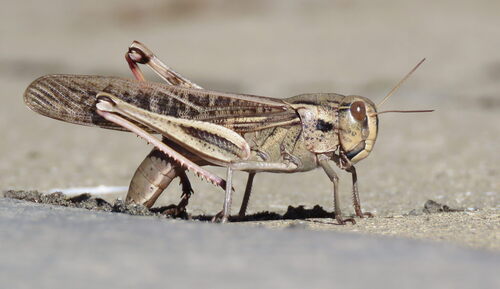
Migratory Locust
Locusta migratoria
Limited sources so far. Check with your municipal agriculturist.
Photo: (c) William Harland, some rights reserved (CC BY) (CC BY 4.0)
How to identify it
- Oriental migratory locust: large grasshopper; swarms during outbreaks, usually after drought.
Damage
- Feeds on leaves and cuts panicles; swarms can strip fields.
Prevention
- Report swarms to the municipal agriculture office immediately.
When to act
No published threshold found yet; set one for your farm in the ENTOCULA field map.
Insecticide only as a last resort, when monitoring shows the threshold is reached and natural enemies are not keeping up. Use only FPA-registered products for this crop and pest, at label rate, with protective equipment, and respect the pre-harvest interval. Rotate insecticide groups to slow resistance.
Sources
IRRI Rice Knowledge Bank: Grasshopper and locust / Wikipedia: Migratory locust
Stenchaetothrips biformis
How to identify it
- Adults: dark brown, about 1 mm, inside rolled leaves; larvae yellow.
Damage
- Silvery streaks or yellow patches; leaves curl from the margin; tips wither. Worst in the dry season on young plants.
Prevention
- Resistant varieties.
- Flood the field for two days to submerge thrips.
Natural enemies
- Predatory thrips, ladybirds, anthocorid bugs, staphylinid beetles.
When to act
No published threshold found yet; set one for your farm in the ENTOCULA field map.
Insecticide only as a last resort, when monitoring shows the threshold is reached and natural enemies are not keeping up. Use only FPA-registered products for this crop and pest, at label rate, with protective equipment, and respect the pre-harvest interval. Rotate insecticide groups to slow resistance.
Sources
IRRI Rice Knowledge Bank: Rice thrips / Wikipedia: Stenchaetothrips biformis
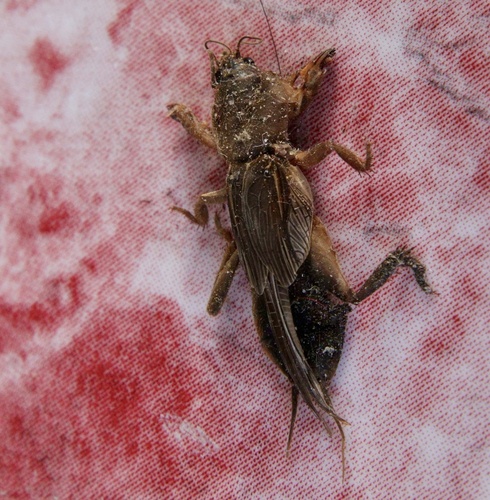
Oriental Mole Cricket
Gryllotalpa orientalis
Photo: (c) Casey Clark G. Sumalinog, some rights reserved (CC BY) (CC BY 4.0)
How to identify it
- Plump yellowish-brown cricket about 20 mm long with shovel-like front legs for digging; lives in burrows (heaps of soil at entrances).
Damage
- Feeds on seeds, roots and stems at the base: missing plants and poor stand in patches.
Prevention
- Keep standing water; flood for 3-4 days and level fields.
- Avoid raised nurseries.
- Collect crickets during land preparation.
Natural enemies
- Sphecid wasps, carabid beetles, nematodes and fungi.
When to act
No published threshold found yet; set one for your farm in the ENTOCULA field map.
Insecticide only as a last resort, when monitoring shows the threshold is reached and natural enemies are not keeping up. Use only FPA-registered products for this crop and pest, at label rate, with protective equipment, and respect the pre-harvest interval. Rotate insecticide groups to slow resistance.
Sources
IRRI Rice Knowledge Bank: Mole cricket / Wikipedia: Gryllotalpa orientalis
Natural enemies and pollinators found in rice fields. Broad-spectrum sprays kill them first.