How to identify each pest, the damage it causes, how to prevent it and when to act. Insecticides are always the last resort.
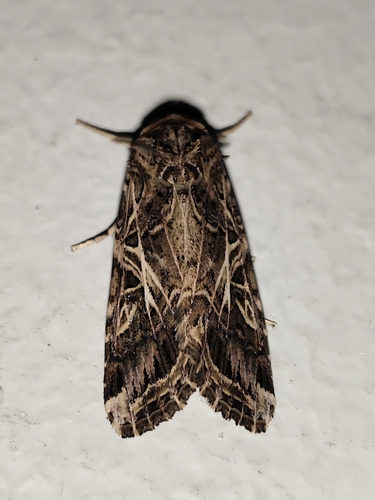
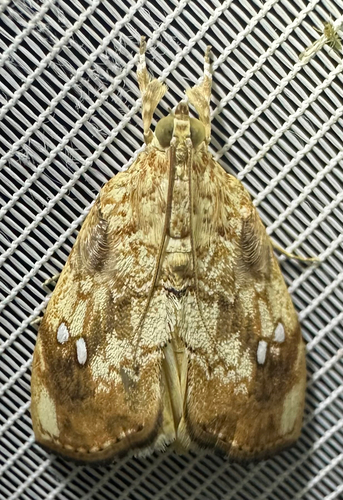
Oriental leafworm moth
Spodoptera litura
Photo: (c) Gabriel Cerino Rieper, some rights reserved (CC BY) (CC BY 4.0)
How to identify it
Eggs: clusters of about 300 covered with brown hairs.
Larva: velvety, 35-40 mm when grown, dark with yellowish-green stripes and white side bands; young larvae greenish.
Adult moth: stout, forewings pale grey to dark brown with wavy white lines; active at night.
Damage
Young larvae scrape leaves to a papery white; older larvae eat holes, skeletonise leaves and bore fruit; can cut seedlings.
Prevention
Field sanitation; destroy egg masses and groups of young larvae.
Castor as a trap crop along borders; light traps and pheromone traps for monitoring.
Keep rice fields flooded (rice).
Natural enemies
Egg and larval parasitoids, predators, and fungal and viral diseases; Bt, NPV and neem on young larvae.
When to act
No published threshold found yet; set one for your farm in the ENTOCULA field map.
Insecticide only as a last resort, when monitoring shows the threshold is reached and natural enemies are not keeping up. Use only FPA-registered products for this crop and pest, at label rate, with protective equipment, and respect the pre-harvest interval. Rotate insecticide groups to slow resistance.
Limited sources so far. Check with your municipal agriculturist.
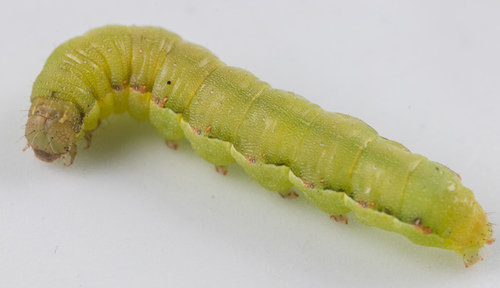
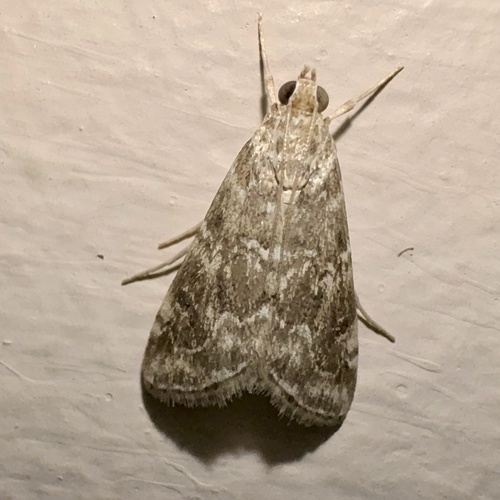
Photo: (c) portioid, some rights reserved (CC BY) (CC BY 4.0)
How to identify it
Adult: drab brown-grey moth, wingspan 26-32 mm, with a pale round spot on the forewing.
Larva: green to dark, with pale lines along the body.
Damage
Leaf feeding and skeletonising; also bores into fruit and heads.
Prevention
Remove weeds and crop residues; hand-pick egg masses.
Natural enemies
Parasitoids and diseases; Bt and NPV products.
When to act
No published threshold found yet; set one for your farm in the ENTOCULA field map.
Insecticide only as a last resort, when monitoring shows the threshold is reached and natural enemies are not keeping up. Use only FPA-registered products for this crop and pest, at label rate, with protective equipment, and respect the pre-harvest interval. Rotate insecticide groups to slow resistance.
Limited sources so far. Check with your municipal agriculturist.
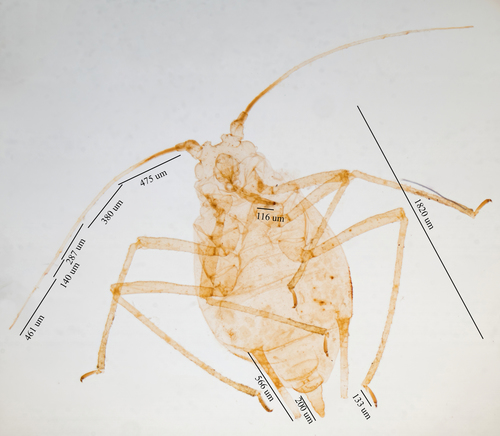
Photo: no rights reserved (CC0 1.0)
How to identify it
Green peach aphid: light green to greenish-brown, usually wingless, with a pair of cornicles; gives birth to live young.
Damage
Curled, yellowed young leaves; honeydew and sooty mould; important virus vector.
Prevention
Avoid excess nitrogen; yellow sticky traps for monitoring.
Natural enemies
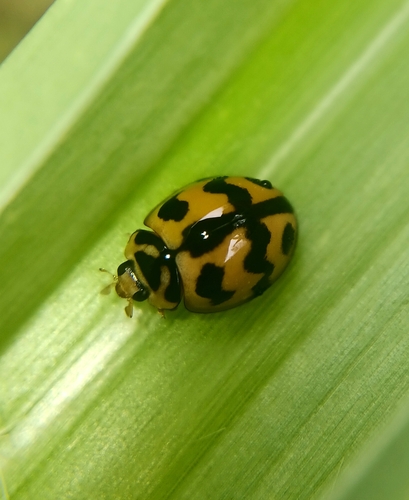
Lacewing larvae, ladybirds and aphid parasitoids.
When to act
No published threshold found yet; set one for your farm in the ENTOCULA field map.
Insecticide only as a last resort, when monitoring shows the threshold is reached and natural enemies are not keeping up. Use only FPA-registered products for this crop and pest, at label rate, with protective equipment, and respect the pre-harvest interval. Rotate insecticide groups to slow resistance.
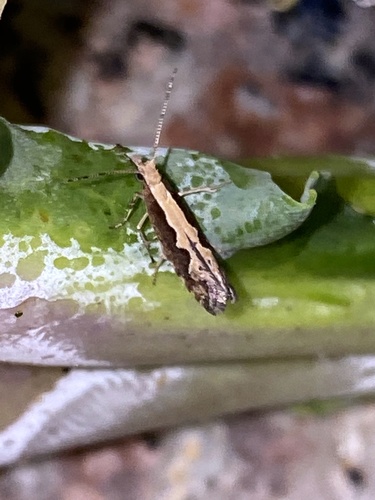
Photo: (c) AnnLazaro, some rights reserved (CC BY-SA) (CC BY-SA 4.0)
How to identify it
Eggs: 0.4 mm, pale, along leaf veins under leaves.
Larva: pale to dark green, about 12 mm, tapered at both ends; wriggles backwards and drops on a thread when touched.
Pupa: in a net-like cocoon under leaves.
Adult: small (about 10 mm) brown moth with three white diamond shapes along the back when the wings are closed.
Damage
Young larvae make "windows" (eat the leaf leaving a thin skin); older larvae eat holes and bore into forming heads. Worst from head formation.
Prevention
Start with clean seedlings; grow head cabbage in cooler months.
Mustard or Chinese cabbage trap crops: one row about 15 days before and one about 25 days after transplanting; destroy before the eggs hatch.
Hand-pick larvae; remove crucifer weeds; destroy crop debris; nets or screenhouses where possible.
Natural enemies
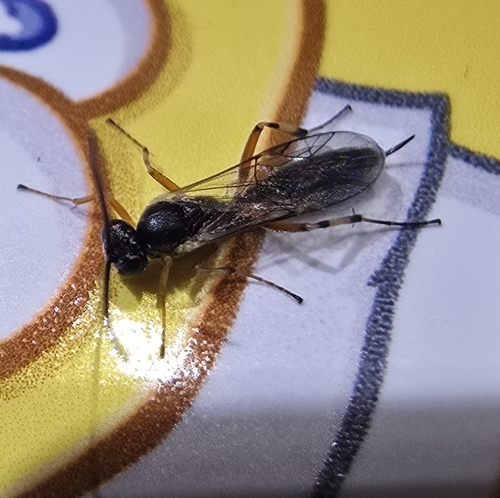
Diadegma semiclausum (common above about 800 m), Cotesia vestalis (lowlands) and other parasitoids.
Bt (kurstaki or aizawai) on young larvae, sprayed late afternoon.
When to act
Action threshold: 2 larvae per plant at 1-4 weeks after transplanting (Rejesus, Inocencio & Eusebio (1996) IPM-DBM technology vs farmers' practice for diamondback moth. Philippine Entomologist 10(1):57-65)
Action threshold: 5 larvae per plant at 5-10 weeks after transplanting (Rejesus, Inocencio & Eusebio (1996) IPM-DBM technology vs farmers' practice for diamondback moth. Philippine Entomologist 10(1):57-65)
Insecticide only as a last resort, when monitoring shows the threshold is reached and natural enemies are not keeping up. Use only FPA-registered products for this crop and pest, at label rate, with protective equipment, and respect the pre-harvest interval. Rotate insecticide groups to slow resistance.
Photo: (c) Robert Taylor, some rights reserved (CC BY) (CC BY 4.0)
How to identify it
Eggs: masses of 10-100+ under outer leaves, pale green turning yellow then brown.
Larva: up to 20 mm with long hairs and white or pale green stripes; feeds in groups under webbing.
Adult: light brown moth just under 20 mm with two small white triangular spots on each forewing.
Damage
Caterpillars feed in the heart of the plant under webbing, leaving brown droppings; even one caterpillar can spoil a head.
Prevention
Check seedlings for egg masses; mustard or Chinese cabbage trap crops; plant away from old brassica plots; hand-pick; destroy debris.
Natural enemies
Ladybirds and lacewings; Bt and neem on young larvae. Avoid broad-spectrum sprays.
When to act
No published threshold found yet; set one for your farm in the ENTOCULA field map.
Insecticide only as a last resort, when monitoring shows the threshold is reached and natural enemies are not keeping up. Use only FPA-registered products for this crop and pest, at label rate, with protective equipment, and respect the pre-harvest interval. Rotate insecticide groups to slow resistance.
Limited sources so far. Check with your municipal agriculturist.
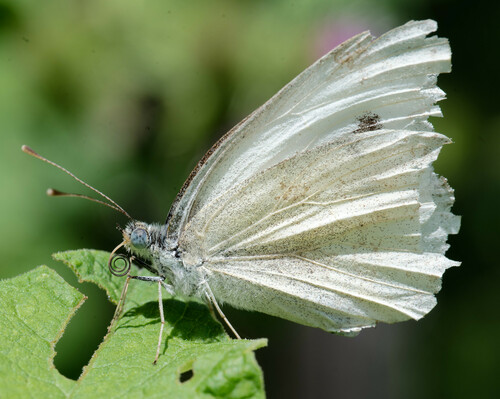
Photo: (c) Corey Farwell, some rights reserved (CC BY) (CC BY 4.0)
How to identify it
Adult: white butterfly with black forewing tips (females with two black spots), wingspan 32-47 mm.
Larva: green velvety caterpillar.
Eggs: yellowish, ribbed, laid singly.
Damage
Caterpillars chew large holes in leaves and soil heads with droppings.
Prevention
Hand-pick caterpillars and eggs; nets.
Natural enemies
Parasitoid wasps; Bt on young larvae.
When to act
No published threshold found yet; set one for your farm in the ENTOCULA field map.
Insecticide only as a last resort, when monitoring shows the threshold is reached and natural enemies are not keeping up. Use only FPA-registered products for this crop and pest, at label rate, with protective equipment, and respect the pre-harvest interval. Rotate insecticide groups to slow resistance.
Limited sources so far. Check with your municipal agriculturist.
Photo: (c) AnnLazaro, some rights reserved (CC BY-SA) (CC BY-SA 4.0)
How to identify it
Adult: small moth (wingspan about 18 mm), grey-brown forewings with wavy grey lines and a kidney-shaped mark.
Larva: bores into the growing point and stems of young plants.
Damage
Kills the growing point of seedlings (no head or several small heads).
Prevention
Check and protect seedbeds; remove infested seedlings.
When to act
No published threshold found yet; set one for your farm in the ENTOCULA field map.
Insecticide only as a last resort, when monitoring shows the threshold is reached and natural enemies are not keeping up. Use only FPA-registered products for this crop and pest, at label rate, with protective equipment, and respect the pre-harvest interval. Rotate insecticide groups to slow resistance.
Limited sources so far. Check with your municipal agriculturist.
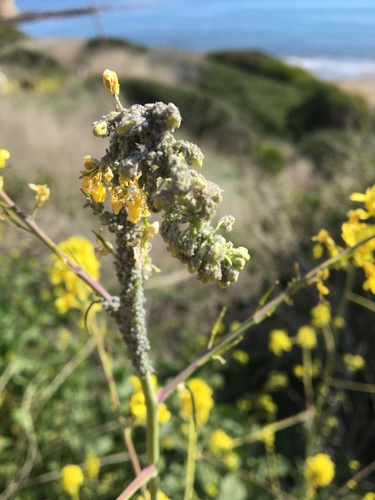
Photo: (c) redrovertracy, some rights reserved (CC BY) (CC BY 4.0)
How to identify it
Cabbage aphid: dense colonies on leaves (see reference photos).
Damage
Curled, yellowed leaves; contaminated heads.
Prevention
Remove crucifer weeds and crop residues; destroy heavily infested leaves.
Natural enemies
Diaeretiella rapae and other parasitoids, ladybirds, syrphids, lacewings.
When to act
No published threshold found yet; set one for your farm in the ENTOCULA field map.
Insecticide only as a last resort, when monitoring shows the threshold is reached and natural enemies are not keeping up. Use only FPA-registered products for this crop and pest, at label rate, with protective equipment, and respect the pre-harvest interval. Rotate insecticide groups to slow resistance.
Mustard aphid: about 1.7 mm; wingless forms greenish-yellow with a fine waxy coat and dark bands; winged forms with a shiny black head and thorax.
Damage
Dense colonies under leaves: curling, yellowing, stunting; honeydew and sooty mould; spreads cauliflower and turnip mosaic viruses.
Prevention
Do not plant downwind of infested crops; remove crucifer weeds; destroy heavily infested leaves; control ants; destroy residues.
Natural enemies
Diaeretiella rapae, Aphidius and Aphelinus parasitoids, ladybirds, syrphid fly larvae, lacewings. Soap or oil sprays on leaf undersides.
When to act
No published threshold found yet; set one for your farm in the ENTOCULA field map.
Insecticide only as a last resort, when monitoring shows the threshold is reached and natural enemies are not keeping up. Use only FPA-registered products for this crop and pest, at label rate, with protective equipment, and respect the pre-harvest interval. Rotate insecticide groups to slow resistance.
Limited sources so far. Check with your municipal agriculturist.
Photo: no rights reserved (CC0 1.0)
How to identify it
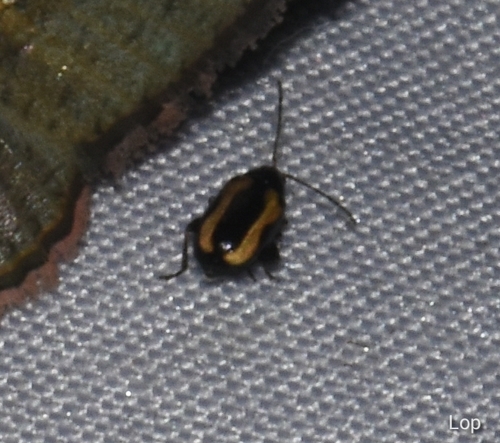
Striped flea beetle: small black beetle with two wavy yellow stripes; jumps when disturbed.
Damage
Many small round "shot holes" in leaves, worst on seedlings.
Prevention
Protect seedlings with netting; remove crucifer weeds.
When to act
No published threshold found yet; set one for your farm in the ENTOCULA field map.
Insecticide only as a last resort, when monitoring shows the threshold is reached and natural enemies are not keeping up. Use only FPA-registered products for this crop and pest, at label rate, with protective equipment, and respect the pre-harvest interval. Rotate insecticide groups to slow resistance.
Unreviewed guide. Written from the cited sources (IRRI, PhilRice, UPLB, CIMMYT, Pacific Pests, Government of India IPM packages, Wikipedia) and retrieved 2026-11-12. Use only FPA-registered pesticides, at label rates. Check local recommendations with your municipal agriculturist.