How to identify each pest, the damage it causes, how to prevent it and when to act. Insecticides are always the last resort.
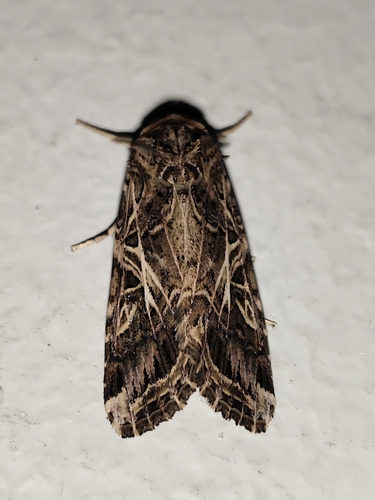
Oriental leafworm moth
Spodoptera litura
Photo: (c) Gabriel Cerino Rieper, some rights reserved (CC BY) (CC BY 4.0)
How to identify it
Eggs: clusters of about 300 covered with brown hairs.
Larva: velvety, 35-40 mm when grown, dark with yellowish-green stripes and white side bands; young larvae greenish.
Adult moth: stout, forewings pale grey to dark brown with wavy white lines; active at night.
Damage
Young larvae scrape leaves to a papery white; older larvae eat holes, skeletonise leaves and bore fruit; can cut seedlings.
Prevention
Field sanitation; destroy egg masses and groups of young larvae.
Castor as a trap crop along borders; light traps and pheromone traps for monitoring.
Keep rice fields flooded (rice).
Natural enemies
Egg and larval parasitoids, predators, and fungal and viral diseases; Bt, NPV and neem on young larvae.
When to act
No published threshold found yet; set one for your farm in the ENTOCULA field map.
Insecticide only as a last resort, when monitoring shows the threshold is reached and natural enemies are not keeping up. Use only FPA-registered products for this crop and pest, at label rate, with protective equipment, and respect the pre-harvest interval. Rotate insecticide groups to slow resistance.
Eggs: laid singly or in small groups on leaves and shoots; turn red before hatching.
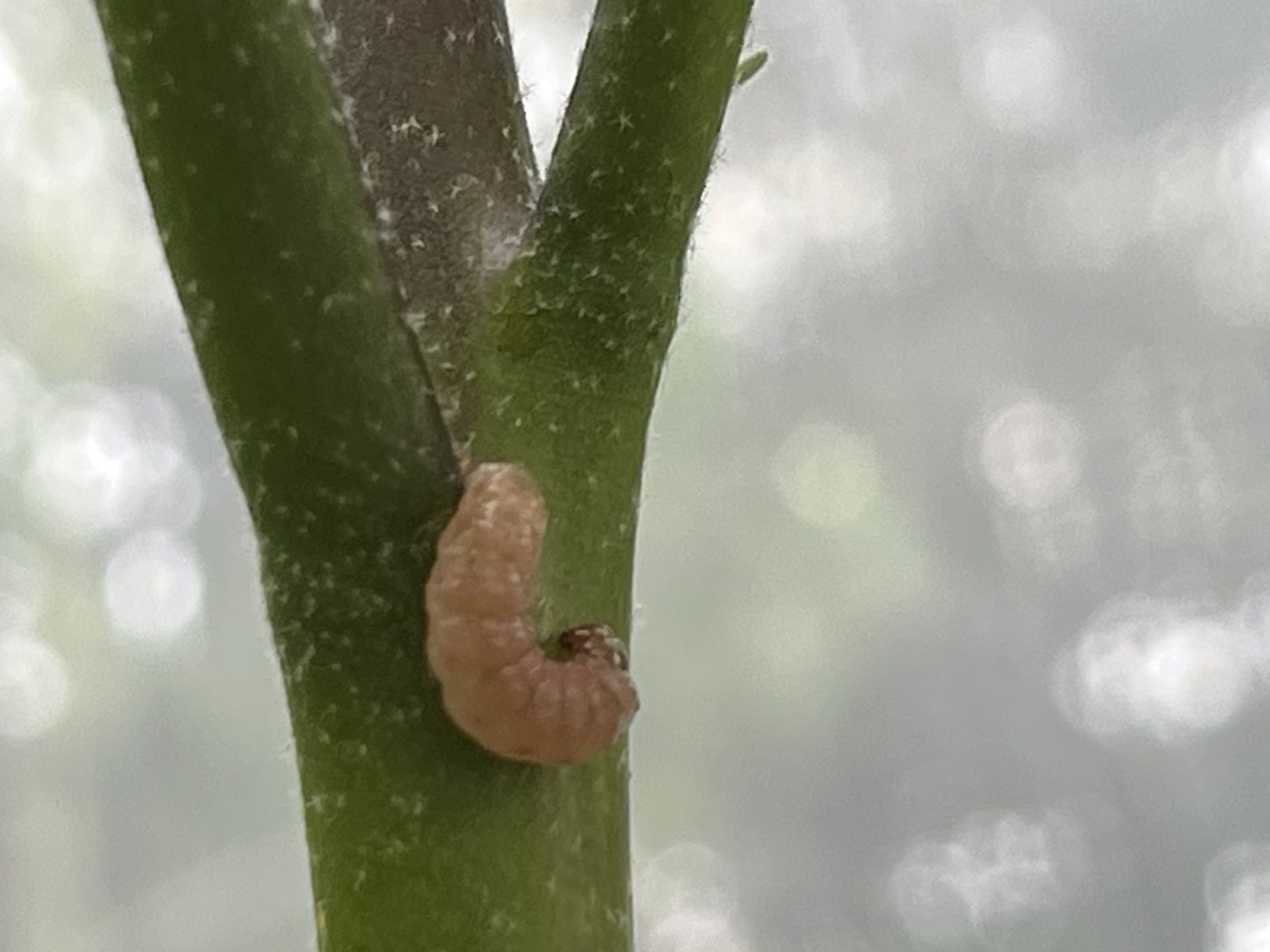
Larva: pink with a dark brown head, 16-23 mm when grown; inside shoots or fruit.
Pupa: dark brown in a silk cocoon.
Adult moth: white wings with dark brown and orange-brown spots and a brown triangular mark; forewing 8.5-12 mm.
Damage
Shoots: the tip wilts and dries ("shoot droop"); the borer inside leaves a hole and frass.
Fruit: small holes plugged with frass; tunnels inside full of frass make fruit unmarketable.
Prevention
Remove and destroy wilted shoots and bored fruit every week (do not leave them in the field).
Grow seedlings under net; use pheromone traps for monitoring (4-5 per acre) or mass trapping (10 per acre).
Intercrop with coriander or fennel.
Destroy old eggplant stubble at the end of the season.
Natural enemies
Trichogramma egg-parasitoid releases; conserve natural enemies; neem seed kernel extract.
When to act
No published threshold found yet; set one for your farm in the ENTOCULA field map.
Insecticide only as a last resort, when monitoring shows the threshold is reached and natural enemies are not keeping up. Use only FPA-registered products for this crop and pest, at label rate, with protective equipment, and respect the pre-harvest interval. Rotate insecticide groups to slow resistance.
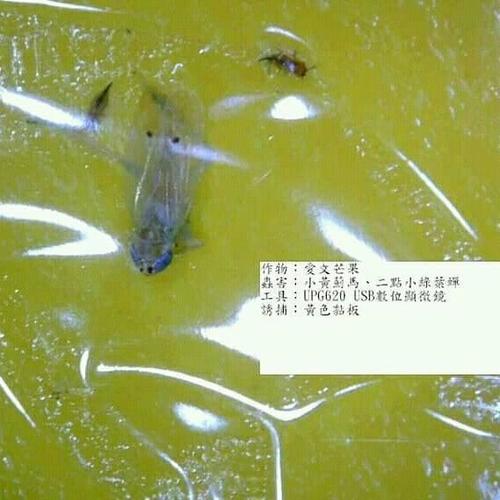
Adult: wedge-shaped, pale yellow-green leafhopper about 2.6 mm, with a black spot on each forewing and on each side of the head.
Nymphs: pale green, wingless, walk sideways when disturbed.
Damage
Sap feeding under leaves: yellow spots, crinkling and curling, then bronzing and drying of leaf edges ("hopper burn").
Prevention
Okra as a trap crop; remove badly affected leaves.
Natural enemies
Egg parasitoids, ladybirds and lacewings; neem seed kernel extract.
When to act
No published threshold found yet; set one for your farm in the ENTOCULA field map.
Insecticide only as a last resort, when monitoring shows the threshold is reached and natural enemies are not keeping up. Use only FPA-registered products for this crop and pest, at label rate, with protective equipment, and respect the pre-harvest interval. Rotate insecticide groups to slow resistance.
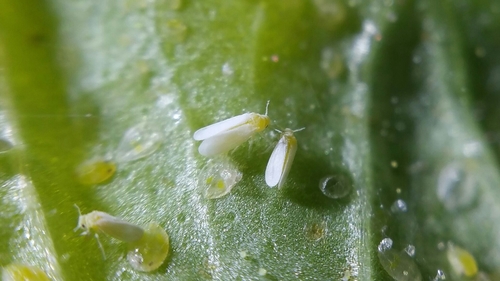
Photo: (c) Mihajlo Tomić, some rights reserved (CC BY) (CC BY 4.0)
How to identify it
Adult: tiny (about 1 mm) white, moth-like insect with powdery wings held roof-like over the body; flies up when leaves are shaken.
Eggs: pear-shaped, about 0.25 mm, standing on leaf undersides.
Nymphs: flat, oval, greenish-yellow scales under leaves.
Damage
Yellowing, leaf curl and drop; honeydew and sooty mould. Spreads tomato leaf curl virus.
Prevention
Yellow sticky traps (10-12 per hectare at 15 cm above the canopy for monitoring).
Border rows of corn or sorghum; remove infected and weed hosts.
Natural enemies
Encarsia and Eretmocerus parasitoids, lacewings, ladybirds; neem.
When to act
No published threshold found yet; set one for your farm in the ENTOCULA field map.
Insecticide only as a last resort, when monitoring shows the threshold is reached and natural enemies are not keeping up. Use only FPA-registered products for this crop and pest, at label rate, with protective equipment, and respect the pre-harvest interval. Rotate insecticide groups to slow resistance.
Photo: (c) Eli, some rights reserved (CC BY) (CC BY 4.0)
How to identify it
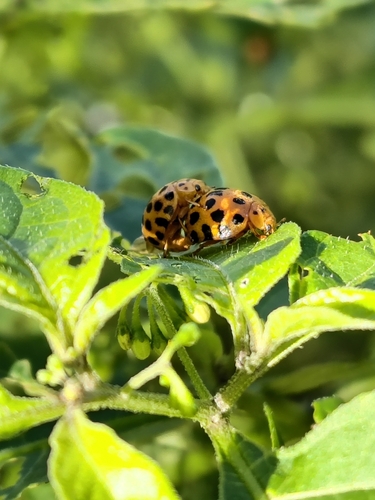
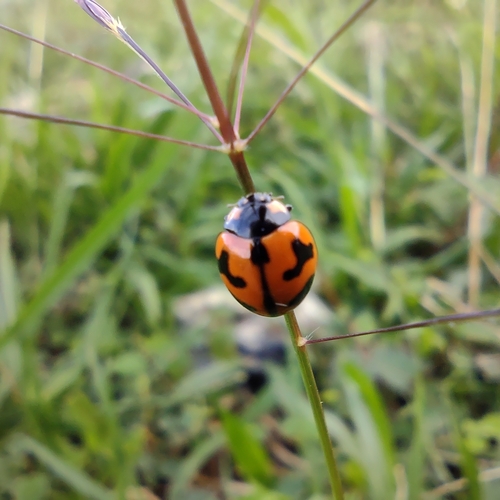
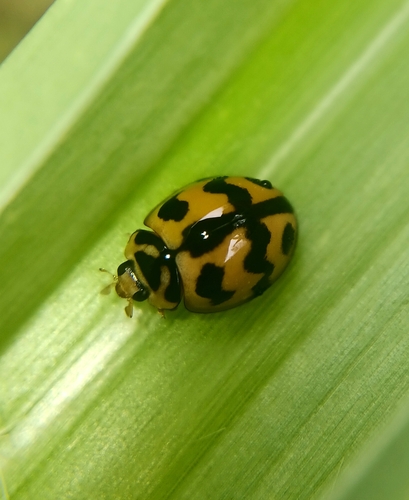
Adult: dull orange, round ladybird with many black spots and fine downy hairs on the wing cases (spot number varies).
Larva: pale yellow-white with long branched dark-tipped spines, up to 6 mm.
Eggs: yellow, upright, in batches of 10-40 under leaves.
Damage
Scrapes leaves leaving ladder-like windows; heavy attack skeletonises leaves and kills seedlings.
Prevention
Hand-pick eggs, larvae and adults when first seen.
Remove nightshade (Solanum nigrum) and other solanaceous weeds; do not plant next to infested crops; destroy debris.
Natural enemies
Pediobius foveolatus parasitoid; predatory bugs; neem seed kernel extract.
When to act
No published threshold found yet; set one for your farm in the ENTOCULA field map.
Insecticide only as a last resort, when monitoring shows the threshold is reached and natural enemies are not keeping up. Use only FPA-registered products for this crop and pest, at label rate, with protective equipment, and respect the pre-harvest interval. Rotate insecticide groups to slow resistance.
Adult: about 1 mm, narrow, yellow, two pairs of fringed wings; nymphs yellow-white and wingless. Just visible to the naked eye.
Damage
Silvering or bronzing of leaves along veins; scarred young fruit on eggplant; warty scars on chili; heavy feeding deforms or kills plants. Spreads tospoviruses.
Prevention
Raise seedlings under fine insect netting away from field crops.
Weed control (flowering weeds attract thrips); avoid overlapping plantings.
Blue sticky traps for monitoring; burn crop residues.
Natural enemies
Predatory bugs (Orius), predatory mites, lacewings; oil or soap sprays suppress thrips enough for predators to build up.
When to act
No published threshold found yet; set one for your farm in the ENTOCULA field map.
Insecticide only as a last resort, when monitoring shows the threshold is reached and natural enemies are not keeping up. Use only FPA-registered products for this crop and pest, at label rate, with protective equipment, and respect the pre-harvest interval. Rotate insecticide groups to slow resistance.
Limited sources so far. Check with your municipal agriculturist.
Photo: (c) Reynante Martinez, some rights reserved (CC BY) (CC BY 4.0)
How to identify it
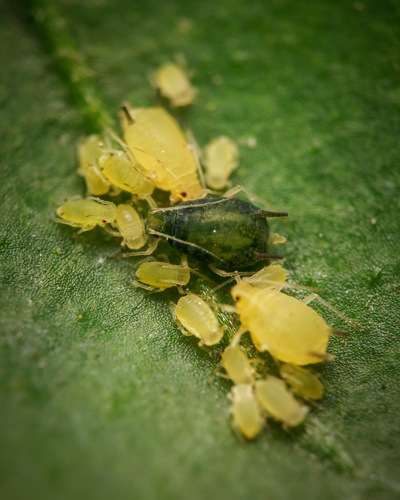
Small (1-4 mm), soft-bodied, light green to dark green aphids with two short cornicles; colonies on shoots and leaf undersides.
Damage
Yellowing and curled young leaves; honeydew and sooty mould; spreads viruses.
Prevention
Avoid excess nitrogen; remove heavily infested leaves; control ants that protect aphids.
Natural enemies
Aphidius and Aphelinus parasitoids, ladybirds, syrphid flies and lacewings.
When to act
No published threshold found yet; set one for your farm in the ENTOCULA field map.
Insecticide only as a last resort, when monitoring shows the threshold is reached and natural enemies are not keeping up. Use only FPA-registered products for this crop and pest, at label rate, with protective equipment, and respect the pre-harvest interval. Rotate insecticide groups to slow resistance.
Limited sources so far. Check with your municipal agriculturist.
How to identify it
Eggplant lace bug (identification details to be added from a Philippine source).
Damage
Sap feeding on leaves.
Prevention
Crop rotation.
Natural enemies
Ladybirds, spiders and predatory bugs.
When to act
No published threshold found yet; set one for your farm in the ENTOCULA field map.
Insecticide only as a last resort, when monitoring shows the threshold is reached and natural enemies are not keeping up. Use only FPA-registered products for this crop and pest, at label rate, with protective equipment, and respect the pre-harvest interval. Rotate insecticide groups to slow resistance.
Unreviewed guide. Written from the cited sources (IRRI, PhilRice, UPLB, CIMMYT, Pacific Pests, Government of India IPM packages, Wikipedia) and retrieved 2026-11-12. Use only FPA-registered pesticides, at label rates. Check local recommendations with your municipal agriculturist.